Last checked: June 4, 2026.
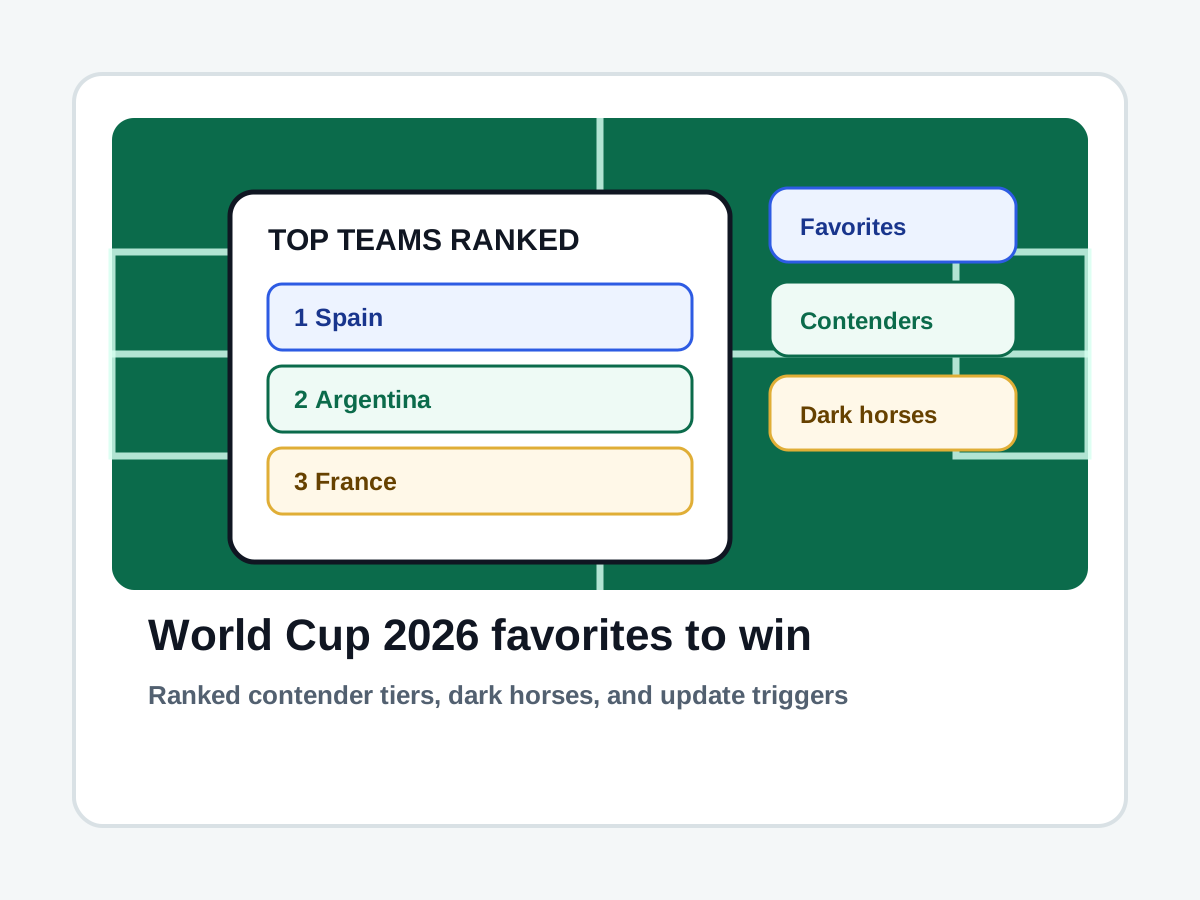
Many fans search for World Cup 2026 favorites to win because they want a clear football answer first: which teams look most capable of winning, which teams belong in the contender tier, and which teams are better treated as dark horses.
This guide gives a ranked editorial snapshot before the final squad window. It focuses on contender tiers, squad logic, draw context, dark-horse paths and update triggers. It does not recommend wagers, sportsbooks, odds, or betting strategies.
Last checked: June 4, 2026.
World Cup 2026 favorites ranked at a glance
This is a pre-final-squad contender snapshot, not official FIFA rankings or betting odds. The order should change as final squads, injuries, form, draw movement and knockout paths become clearer.
| Rank | Team | Current tier | Why they belong here | Main question |
|---|---|---|---|---|
| 1 | Spain | Leading favorite | Technical control, young talent, and a strong recent tournament profile. | Can the squad keep enough depth and balance through a seven-match tournament? |
| 2 | Argentina | Leading favorite | Defending champion profile, elite match-winners, and massive tournament experience. | How much does the final squad lean on aging stars versus newer depth? |
| 3 | France | Leading favorite | Deep talent pool, proven knockout pedigree, and multiple ways to win matches. | Can injuries and role balance stay manageable? |
| 4 | England | Leading favorite | Squad depth, attacking options, and a high ceiling if the midfield balance clicks. | Can England turn quality into knockout control? |
| 5 | Brazil | Leading favorite | Historic ceiling, individual quality, and global tournament pressure. | Can Brazil convert talent into a stable tournament identity? |
| 6 | Portugal | Leading favorite | Star power, technical options, and a strong qualifying profile. | How does Portugal manage roles, minutes, and knockout matchups? |
How we ranked the favorites
Sports Pulse Media ranks World Cup favorites with an editorial method, not betting odds or sportsbook markets. The ranking starts with official and verifiable tournament inputs, then adds football judgment where official sources do not provide a direct answer.
| Ranking input | What we check | How it affects the page |
|---|---|---|
| Official baseline | FIFA men’s ranking, the confirmed draw, and the published match schedule. | Sets the starting point for team strength, group context, and possible route pressure. |
| Squad depth | Goalkeeper options, defensive balance, midfield control, attacking variety, bench strength, and expected final-squad risk. | Separates true title favorites from teams that depend too heavily on one star or one tactical plan. |
| Tournament pedigree | Recent World Cup, continental tournament, and knockout-stage performance. | Rewards teams that have already shown they can handle high-pressure tournament football. |
| Tactical balance | Whether the team can win in more than one match state: leading, chasing, controlling possession, or surviving pressure. | Helps avoid overrating teams with talent but limited tournament flexibility. |
| Draw and path risk | Group difficulty, travel context, likely Round of 32 and knockout route, and matchup volatility. | Keeps the ranking tied to the 2026 tournament format rather than generic team reputation. |
Evidence boundary
The facts on this page come from official sources where possible: FIFA rankings, the final draw, and FIFA’s published schedule. The contender order is Sports Pulse Media’s editorial judgment based on those inputs plus squad depth, tournament record, tactical balance, and route risk.
This page does not use betting odds to rank teams. It also does not present the list as an official FIFA ranking, a guaranteed prediction, or a final-squad assessment. When an injury, squad announcement, federation update, or official schedule change affects a team, treat that team’s note as provisional until this guide is refreshed.
Update triggers
Use these signals as the refresh checklist for this contender ranking:
| Trigger | Why it matters | Expected update |
|---|---|---|
| FIFA ranking update | Changes the official baseline for team strength and seeding context. | Review the Top 6 and serious contender tiers. |
| Final squads announced | Confirms player availability, depth, omissions, and tactical options. | Re-rank teams with major squad changes. |
| Major injury or suspension news | Can change a team’s ceiling or knockout reliability. | Update the affected team’s risk note. |
| Draw or schedule clarification | Changes group path, travel load, and knockout route assumptions. | Refresh path-risk language and internal links. |
| Recent form shift | Friendlies, continental matches, or coach changes can alter contender confidence. | Add a dated note if the shift is material. |
Who can win the 2026 World Cup?
Use this as a football-first contender framework. The answer should change as FIFA rankings, final squads, injuries, form, draw movement and knockout paths become clearer.
| Team group | Teams | Why they can win | Main risk |
|---|---|---|---|
| Leading favorites | Spain, Argentina, France, England, Brazil, Portugal | Elite talent pools, major-tournament experience, global fan demand and credible title paths. | Injuries, form drops, draw difficulty and knockout matchup volatility. |
| Serious contenders | Netherlands, Germany, Uruguay, Belgium, Morocco, Croatia | Strong football identities and enough quality to reach deep knockout rounds. | Need final squad clarity, balanced form and a favorable path. |
| Dark horses | USA, Mexico, Colombia, Japan, Senegal, Switzerland | Host energy, tactical upside, regional support or upset potential. | Less margin for error against the top favorites. |
| Prediction watchlist | Teams rising after rankings, squad news or group-stage results | Some contenders become more realistic once the draw and injuries settle. | Early predictions can overreact to one match, one star player or one friendly. |
Contenders and dark horses
The ranked top six gives the clearest winner snapshot. The next tier matters because one draw break, injury return, or tactical matchup can turn a contender into a realistic semi-final or final team.
| Search intent | Best current answer | Why it matters |
|---|---|---|
| Who are the World Cup 2026 favorites? | Spain, Argentina, France, England, Brazil, Portugal | Strong squads, global demand and credible title paths. |
| Which contenders are close behind? | Netherlands, Belgium, Germany, Uruguay, Morocco, Croatia | Enough quality to reach deep knockout rounds if form and draw align. |
| Who are the dark horses? | USA, Mexico, Colombia, Japan, Senegal, Switzerland | High-interest teams with upset paths, host demand or tactical upside. |
| Is this a betting page? | No | This is editorial football analysis, not odds, picks or sportsbook advice. |
Favorites vs contenders vs dark horses
These labels are not the same thing:
| Label | What it means | Reader takeaway |
|---|---|---|
| Favorite | A team with a realistic title ceiling before the tournament starts. | Start here if you want the most credible winner candidates. |
| Contender | A team with enough quality to reach the quarter-finals, semi-finals or beyond if the path opens. | Watch form, squad depth and draw difficulty. |
| Dark horse | A team with upset potential, host energy or a tactical matchup path. | Useful for storylines and fan planning, but not the same as a leading favorite. |
| Prediction | A framework that changes as evidence changes. | Do not treat early analysis as odds, picks or a guaranteed winner. |
Contender tiers
| Tier | Teams | Why they belong here |
|---|---|---|
| Leading favorites | Spain, Argentina, France, England, Brazil, Portugal | Ranking strength, squad depth, global fan demand, and high tournament expectations. |
| Serious contenders | Netherlands, Belgium, Germany, Uruguay, Morocco, Croatia | Strong football identities and credible knockout upside. |
| High-interest outsiders | United States, Mexico, Colombia, Japan, Senegal, Switzerland | Strong storylines, host or diaspora demand, and upset potential. |
| High-demand teams | USA, Mexico, Canada, Argentina, Brazil, England, France, Portugal | High ticket, viewing, travel, and sponsor demand regardless of final outcome. |
What makes a true contender?
For fans, a contender is not only a team that can win. It is also a team that shapes real planning decisions:
- fan demand and match selection;
- legal viewing choices by country and language;
- host-city and travel planning;
- viewing-party interest;
- knockout scenario tracking;
- international time-zone planning.
Teams to monitor first
| Team | Football reason | Fan planning angle |
|---|---|---|
| Spain | Elite technique and top-tier ranking profile. | Spanish-language viewing demand and high international fan interest. |
| Argentina | Defending champion profile and global fan base. | Messi-era search demand and global viewing interest. |
| France | Deep squad and a strong Group I story. | France viewing, travel, and Northeast fan interest. |
| England | Huge English-language audience and squad depth. | UK viewing, travel planning and high search demand. |
| Brazil | Historic ceiling and Group C spotlight. | Global fan interest and high viewing demand. |
| Portugal | Star power and a high-demand group. | Ronaldo-related searches and Portugal fan travel. |
| United States | Host-country attention and domestic broadcaster value. | USMNT, viewing, host-city travel, and reader planning routes. |
| Mexico | Opening-match demand. | Mexico City, Guadalajara, and Spanish-language content. |
| Canada | Host-country storyline. | Toronto, Vancouver, travel, and legal viewing. |
Prediction limits
To stay compliant and useful, avoid:
- sportsbook recommendations
- “guaranteed winner” language
- unsupported odds claims
- legal odds references, where allowed
- encouraging readers to gamble
- presenting predictions as facts
If you are looking for bracket-style predictions, use the knockout bracket prediction framework. If you are trying to understand third-place advancement or best third-placed teams, start with Best Third-Place Teams explained.
Related pages
- Team power rankings
- Group-by-group analysis
- Knockout bracket prediction framework
- Best Third-Place Teams explained