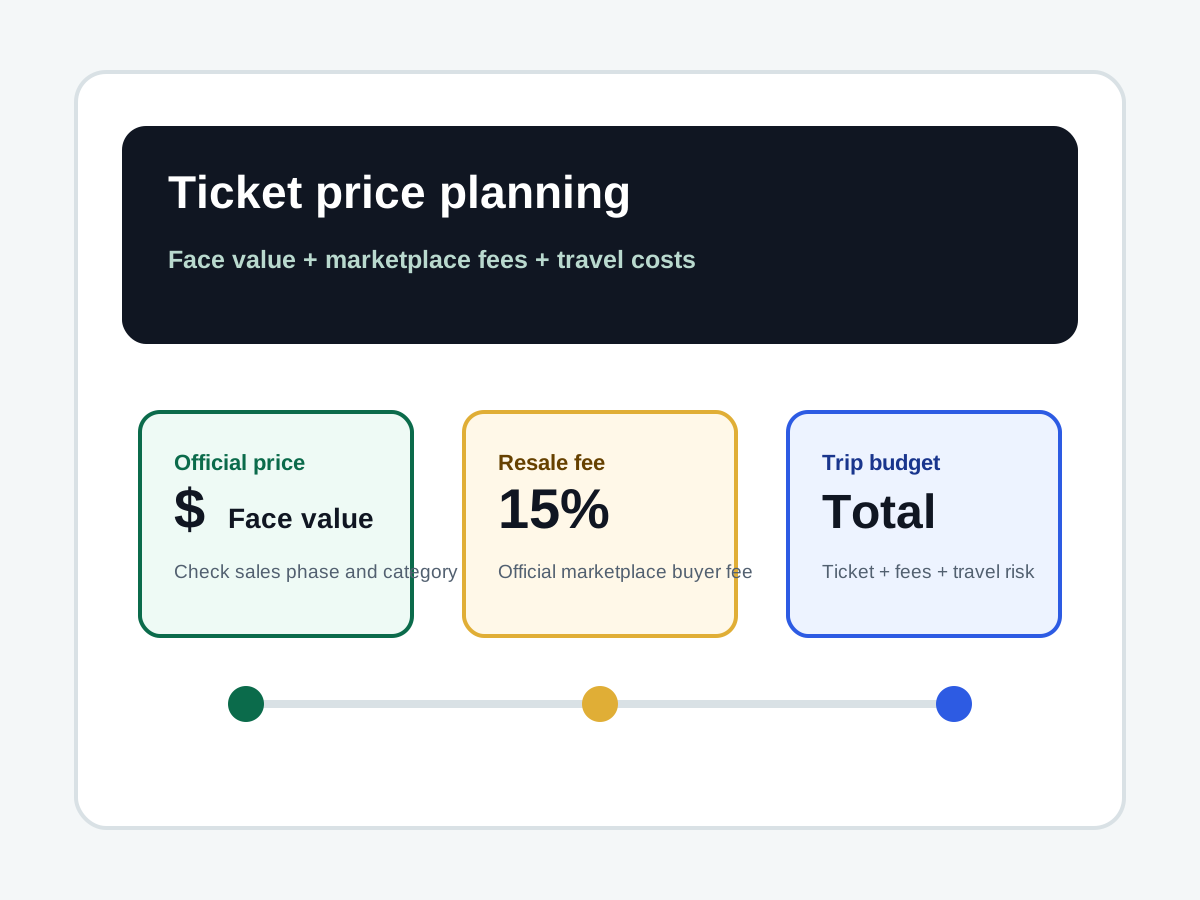
Check the $60 tier, resale fee, and full trip budget together.
FIFA has published a USD 60 Supporter Entry Tier as a low-price signal and says official resale marketplace buyers pay a 15% buyer fee. Do not judge a 2026 World Cup ticket by the listing alone; compare final checkout cost, hotels, transport, payment costs, and cancellation risk before paying.
- Start
- Check FIFA ticketing and official resale guidance first.
- Compare
- Separate face value from marketplace and payment fees.
- Protect
- Avoid nonrefundable travel until ticket delivery and transfer rules are clear.
Last checked: 30 May 2026
The short answer: FIFA has published a USD 60 Supporter Entry Tier for qualified-team supporters, and FIFA says official resale purchases carry a 15% buyer fee. For most fans, the real ticket budget is the final checkout cost plus hotels, flights, local transport, entry documents and cancellation risk.
The listed ticket price is not the amount most fans should budget. Final checkout cost, buyer fees, currency conversion, card fees, hotel timing and refund exposure decide whether a World Cup match is affordable.
Ticket price vs fee vs total budget
Use these terms before comparing official sales, official resale, hospitality packages or third-party marketplace listings.
| Term | Meaning | Why it matters |
|---|---|---|
| Ticket price | The official face value or the listing price shown before checkout. | It is not always the final amount paid. |
| Buyer fee | The official resale or marketplace checkout fee added to the ticket transaction. | It can change the real cost and should be compared at final checkout. |
| Final checkout cost | The amount shown after required fees, taxes, payment charges and currency conversion are visible. | This is the number to compare across FIFA official resale, hospitality and backup marketplace routes. |
| Total trip budget | Ticket price plus fees, hotel, transport, food, insurance and cancellation exposure. | This is the number that decides whether a match trip is affordable. |
The real cost of a 2026 World Cup ticket is not just the number shown on a listing. Fans need to understand official ticket categories, FIFA’s variable pricing approach, resale marketplace fees, third-party marketplace markups, and the travel cost that comes with attending a match.
The safest budgeting rule is simple: separate the ticket price from the total trip cost before deciding whether a listing is affordable. For most fans, the winning decision is not “find the cheapest listing”; it is “find the lowest-risk path that still fits the full trip budget.”
2026 World Cup ticket price snapshot
Use this snapshot before comparing official sales, official resale, hospitality packages or third-party marketplace listings.
| Price question | Current planning answer | What to verify before paying |
|---|---|---|
| Cheapest confirmed signal | FIFA has announced a USD 60 Supporter Entry Tier for qualified-team supporters. | Eligibility, allocation rules and actual availability through the relevant association. |
| Standard ticket price | Standard prices depend on category, match, phase, demand and availability. | FIFA sales phase, seat category, match and final checkout price. |
| Official resale fee | FIFA says the Resale/Exchange Marketplace buyer fee is 15% of the total cost, inclusive of taxes. | Final displayed fee, currency costs and whether the ticket can be delivered through the official flow. |
| Hospitality cost | Hospitality is a premium package route, not a cheap-ticket route. | What is included, ticket access, guest terms, refund rules and official provider status. |
| Real fan budget | Ticket checkout cost plus hotels, transport, food, insurance and cancellation risk. | Nonrefundable exposure before committing to a ticket or travel plan. |
Ticket price answer for searchers
If your search was "2026 World Cup ticket prices," choose the question you actually need answered before comparing offers.
Use official phases, categories, supporter allocations, and availability before comparing resale listings.
Resale fees Compare official resale and backup marketplacesUse the risk matrix before judging StubHub, SeatGeek, Vivid Seats, Viagogo, or GoTickets listings.
Trip budget Add hotel and transport costA ticket can look affordable until nonrefundable hotels, flights, and matchday transport are included.
Risk protection Check cancellation exposureList every nonrefundable cost before deciding whether a ticket route fits your budget.
Which ticket price answer do you need?
The USD 60 tier is a confirmed low-price signal, but eligibility and supply are not the same as general public availability.
Official resale, third-party resale, payment fees and delivery guarantees can change the real cost.
A cheaper match ticket can become expensive if it forces a worse city base or nonrefundable travel.
Premium value comes from what is included, how guests enter, cancellation terms and support, not only seat location.
Red flags before you pay
Use these checks before treating any ticket listing, package or marketplace offer as safe.
Service fees, buyer fees, delivery terms, currency conversion and taxes can change the real cost.
The supporter entry tier is a confirmed FIFA signal, but it is tied to qualified-team supporter allocation rules.
Some travel offers sell lodging or experiences while ticket access is separate or conditional.
Check transfer process, refund terms, replacement policy and whether the seller already controls the ticket.
Budget for the total cost, not just the ticket
Use this summary before comparing official tickets, official resale, hospitality, or third-party marketplaces.
- Confirmed low-price signal
- FIFA announced a USD 60 Supporter Entry Tier for qualified-team supporters, including the final.
- Standard seat range
- Do not rely on a single generic range. Check the FIFA sales phase, category, match, demand level, availability, and final checkout price before using any number in a budget.
- Official resale buyer fee
- FIFA states the Resale/Exchange Marketplace buyer fee is 15% of the total cost, inclusive of taxes.
- Budget rule
- Compare ticket + fees + travel + cancellation risk before choosing a channel.
Quick answer
FIFA’s official price structure is based on ticket categories, sales phases, match demand, and availability. FIFA has also announced a USD 60 Supporter Entry Tier for qualified-team supporters across all 104 matches, including the final.
For resale, FIFA says the buyer fee on the FIFA Resale/Exchange Marketplace is 15% of the total cost, inclusive of taxes. Third-party marketplaces may have their own fees, markups, guarantees, delivery rules, and refund conditions.
If you are still choosing where to buy, start with our channel guide: Where to buy 2026 World Cup tickets safely.
If you are building a full match trip budget, continue with: 2026 World Cup travel insurance guide.
| Buyer situation | Safer next step |
|---|---|
| You want official face value | Start with FIFA ticket guidance and wait for official availability. |
| You are comparing resale listings | Read the safe buying channel comparison before judging fees. |
| You want a premium experience | Compare hospitality only after understanding what is included and what is not guaranteed. |
| You are traveling for one match | Add hotels, transport, insurance, and cancellation risk before deciding a ticket is affordable. |
| You are following a team | Keep plans flexible until group, Round of 32, and knockout paths are clearer. |
How much should fans actually budget?
A 2026 World Cup ticket budget should start with the ticket checkout cost, but it should not end there. The same ticket can be affordable for a local fan and too risky for an international fan if hotels, flights, entry documents or cancellation rules are locked in too early.
| Fan type | Budget components | Planning rule |
|---|---|---|
| Local fan | Ticket checkout cost + local transport + food | Avoid paying for flexibility you do not need, but still compare final checkout fees. |
| Domestic traveler | Ticket checkout cost + hotel + city transport + food + cancellation buffer | Keep hotel terms flexible until ticket access and match timing are clear. |
| International fan | Ticket checkout cost + flights + hotel + insurance + entry documents + payment/currency fees | Do not treat a cheap ticket as affordable until travel risk is included. |
Fast budget answer by fan type
Use this table before clicking a ticket listing, hospitality offer, or hotel bundle.
Local transport and timing usually matter more than hotels. Avoid paying a premium for flexibility you do not need.
A ticket that looks affordable can become expensive if it forces nonrefundable travel or a poor city base.
Use refundable hotels and avoid assuming a knockout path until the bracket is official.
Premium value should be judged by access, service, certainty, and guest needs, not only by seat location.
What “face value” means
Face value is the official ticket price before later resale markups or marketplace pricing differences. But fans should not assume there is one universal face value for every 2026 World Cup seat.
Price can vary by:
- match
- stadium
- seat category
- sales phase
- availability
- team demand
- official supporter allocation
- local rules for resale or exchange
That is why your budget should focus on price components, not only on a single headline number.
Official ticket categories
FIFA describes ticket categories as classifications designed for different fan preferences and needs. The broad standard categories are:
| Category | General meaning | Budget implication |
|---|---|---|
| Category 1 | Highest-priced standard seats, primarily lower tier | Usually the highest standard-ticket budget |
| Category 2 | Outside Category 1 areas, lower and upper tiers | Mid-to-high budget |
| Category 3 | Outside Category 1 and 2 areas, typically upper tier | More budget-conscious when available |
| Category 4 | Most affordable category, upper tier | Lowest standard category when available |
| Accessibility Tickets | Designated accessible seating areas | Check FIFA rules and companion-ticket process |
FIFA also lists Participating Member Association supporter categories, including Supporter Premier, Supporter Standard, Supporter Value, and Supporter Entry.
The USD 60 Supporter Entry Tier
FIFA announced a Supporter Entry Tier priced at USD 60 per ticket for all 104 matches, including the final. This tier is intended for fans of qualified teams and is managed through the participating member associations.
This is important for budgeting, but it should not be misunderstood:
- it is not necessarily the general public price for every fan
- it is tied to supporter allocations
- selection and distribution are managed by each participating association
- availability may be limited
For most fans, the practical question remains: which official phase, ticket category, and match are you actually eligible to buy?
Variable pricing vs dynamic pricing
This topic is easy to misread. FIFA’s support page says it applies variable pricing and may adjust ticket prices throughout sales phases based on demand and availability for each match. The same FIFA page also says it is not implementing a dynamic pricing model where prices are automatically modified.
For fans, the practical takeaway is:
- prices may change across sales phases or availability reviews
- high-demand matches can cost more
- the price you saw earlier may not be the price you see later
- screenshots from old sales windows may not reflect current availability
Do not build a travel plan around an old price screenshot.
How FIFA resale fees change the final ticket cost
FIFA says the fee for buying tickets on the FIFA Resale/Exchange Marketplace is 15% of the total cost, inclusive of taxes, and that the final cost is displayed before purchase.
That 15% buyer fee belongs to FIFA’s official resale/exchange route. Third-party marketplaces may add their own buyer fees, service fees, delivery terms, seller markups and currency effects, so do not compare a third-party headline listing against a FIFA resale checkout total without normalizing the final cost.
A simple planning formula:
Official resale budget formula
Start with the listed price shown in the FIFA Resale/Exchange Marketplace.
FIFA states the buyer fee is 15% of the total cost, inclusive of taxes.
Consider currency conversion, card fees, and bank processing where relevant.
Flights, hotels and cancellation rules can change the real affordability of the ticket.
Example: if a resale listing is shown before final checkout, do not compare that number against a third-party marketplace headline price until you also include the final displayed FIFA fee and any payment costs.
Mexico and Ontario resale rules
FIFA’s resale fee page notes two important local rules:
- residents of Mexico may use the FIFA Exchange Marketplace only at the original price paid to FIFA Ticketing by the primary seller, including applicable taxes and fees, or lower
- for matches at Toronto Stadium, Ontario rules mean tickets may be purchased on the FIFA Resale Marketplace only at the original price paid by the primary seller, including applicable taxes and fees, or lower
This matters because resale pricing rules are not identical across every host market.
Third-party marketplace prices
Third-party marketplaces such as StubHub, SeatGeek, Vivid Seats, Viagogo and GoTickets may show listings when fans search for World Cup tickets. Those prices are not FIFA official face values.
Before treating a third-party listing as affordable, check:
- service fees
- delivery date
- whether the seller already has the ticket
- whether the ticket can be transferred through the official FIFA ticket process
- refund rules
- replacement-ticket rules
- currency conversion
- whether travel costs are refundable if ticket delivery fails
For channel safety, use the safe buying guide. This page focuses on price, fee and budget math: Where to buy 2026 World Cup tickets safely.
Price comparison matrix
Use this before deciding which ticket channel is actually cheaper.
| Channel | Price signal | Main risk | Best use case |
|---|---|---|---|
| FIFA official sales | Official category or supporter allocation price | Availability and eligibility can be limited | Fans who can wait for official sales phases. |
| FIFA resale/exchange | Official resale listing plus FIFA buyer fee | Inventory can change quickly | Fans who want the official resale route. |
| Hospitality | Package price, often including premium services | Higher total cost and package-specific terms | Fans prioritizing certainty, service, or corporate hosting. |
| Third-party marketplaces | Seller listing plus marketplace fees | Markups, delivery timing, transfer rules, refund terms | Fans comparing options after reading risk policies. |
| Travel packages | Hotel/travel bundle price, sometimes with separate ticket language | Ticket inclusion may be unclear | Fans who need lodging support but must verify ticket terms. |
The best deal is not always the lowest headline price. A higher official or hospitality price can be safer than a cheaper listing if it reduces delivery, refund, or travel-cancellation risk.
Trust check before using this as a buying guide
This page is designed for budgeting, not for pushing readers into one seller. Use it this way:
| Claim type | How to handle it |
|---|---|
| Official FIFA price or fee | Verify against FIFA ticketing or FIFA support pages before publishing or spending. |
| Third-party resale price | Treat as a marketplace listing, not official face value. Compare final checkout terms. |
| Hospitality package | Confirm what is included, whether the package includes match tickets, and who is the official provider. |
| Travel package | Confirm whether tickets are included or separate, and whether hotel/flight payments are refundable. |
| Paid or affiliate-supported link | Use the link only after the route, fee, delivery and refund logic is clear. |
Disclosure note: Sports Pulse Media may earn from clearly labeled ticket, hotel, travel insurance, eSIM or payment links, but paid placement should never be presented as FIFA official unless that status is documented by the official source.
Which ticket price question are you really asking?
Searchers often type “2026 World Cup ticket prices” when they actually need one of four answers:
| Search intent | Better question | Best next page |
|---|---|---|
| Cheapest possible seat | What official low-price or supporter allocation could apply to me? | Official buying guide |
| Resale comparison | What will I pay after buyer fees and delivery rules? | Where to buy safely |
| Team-specific trip | What happens if my team moves cities or reaches the knockout stage? | Team tracker |
| Hotel and travel budget | Can I afford the trip if the ticket plan changes? | Hotel booking hub |
This matters because a reader who sees “prices” in Google wants a number, but a reader who stays on the page needs a planning route. This guide gives both: confirmed pricing signals first, then the budgeting framework needed before spending.
Total budget checks
Before buying, write down:
- ticket price
- buyer fee
- payment and currency conversion cost
- travel to the host city
- hotel nights
- local transport
- food and matchday spending
- visa, passport or entry-document cost
- cancellation risk
- backup plan if tickets are unavailable or too expensive
If you cannot absorb the travel cost if a ticket plan fails, the listing may be too risky even if the ticket itself looks affordable.
Budget planning path
Ticket intent often turns into hotel, travel, insurance, payments, and viewing decisions.
Use official prices, resale fees, and marketplace terms instead of headline listings.
Refundable rooms can reduce risk when match access is uncertain.
Flights, documents, local transit, and mobile data affect the real cost.
Paid or affiliate-supported links should be clearly labeled, and readers should still compare the route, fees, delivery and refund terms.
Budget formulas fans can actually use
Use these simple formulas before comparing tickets across official, hospitality, package, or resale channels.
| Formula | What it tells you |
|---|---|
| Ticket checkout cost = listed price + buyer fee + taxes + payment/currency cost | The amount you will actually pay for the ticket transaction. |
| Match trip cost = ticket checkout cost + hotel + transport + food + local transit + insurance | Whether the match is affordable as a trip, not just as an event ticket. |
| Risk exposure = nonrefundable ticket + nonrefundable hotel + nonrefundable flight | The amount you could lose if the plan fails or changes. |
| Upgrade decision = premium price difference / problems solved | Whether hospitality, refundable travel, or a better location is worth the added cost. |
Example: a cheaper ticket can be the worse financial decision if it requires a nonrefundable hotel, a risky delivery date, or a city change that cannot be insured.
Three sample planning scenarios
These examples are not official FIFA prices. They show how fans should think about total cost.
| Fan scenario | Main cost pressure | Safer planning move |
|---|---|---|
| Local fan attending one group match | Ticket price and local transport | Wait for official availability, compare final checkout totals, avoid unnecessary hotel costs. |
| International fan attending one match | Flight, hotel, ticket certainty, entry documents | Avoid nonrefundable travel until ticket access and travel dates are firm. |
| Knockout-stage follower | Uncertain team path and short booking window | Keep hotel and transport flexible until the bracket is known. |
Price update rules for Sports Pulse Media
Because 2026 World Cup ticket information can change by sales phase, update this guide when any of the following happens:
- FIFA announces a new sales phase or pricing category.
- FIFA changes resale or exchange fee guidance.
- Official hospitality package details change.
- A host-market resale rule affects buyer cost.
- A major third-party marketplace changes fee display or guarantee language.
Do not publish a final “average ticket price” unless the data source, date, channel, and methodology are clear.
Source notes
Last checked: 30 May 2026