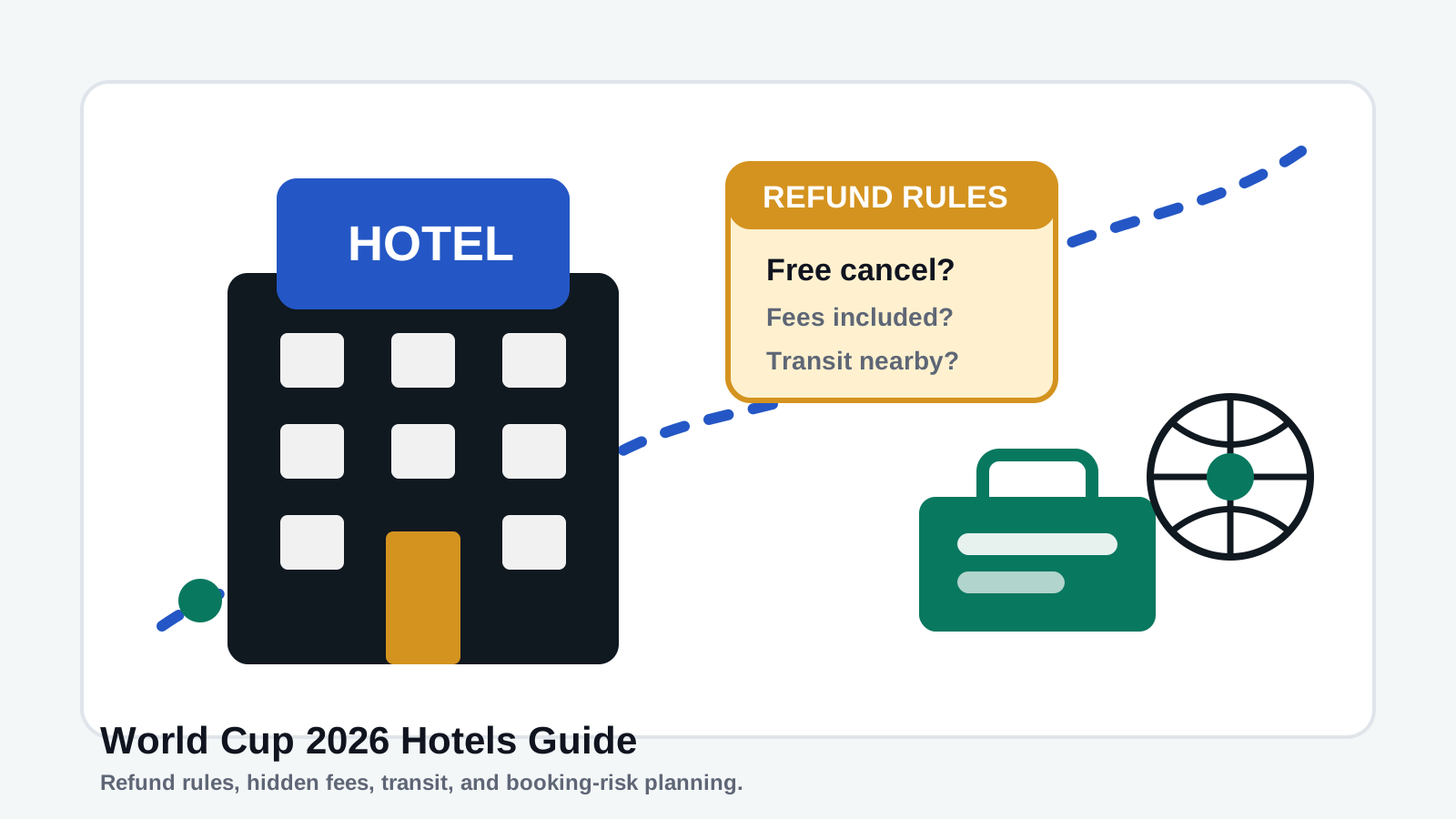
Cross-border World Cup travel should be planned like three separate travel systems, not one domestic trip. Check official entry sources for each country, then budget for documents, mobile data, insurance, currency, airport timing, and flexible hotels.
Independent planning guide. Not affiliated with FIFA.
- Page type
- Travel budget and route planning
- Risk focus
- Nonrefundable booking, border, transport, and hidden-fee exposure
- Useful services to compare
- Hotels, tickets, insurance, eSIM, payments, transfers, and itinerary tools
Verified Foundation
Facts this budget page depends on
Official-source facts
- The 2026 World Cup is hosted across Canada, Mexico, and the United States.
- CBP states WHTI rules affect documents for entering or departing the United States within the Western Hemisphere.
- Canada's official entry page states visitors may need a visa or eTA depending on their passport and situation.
- Mexico's INM operates visitor entry documentation processes such as the Forma Migratoria Multiple.
What readers must recheck
- Entry, visa, passport, eTA, FMM, and border rules must be checked on official government sources.
- Ticketing should start with official FIFA ticketing guidance before resale or package comparison.
- Paid placements must be labeled and cannot imply official FIFA, government, airline, hotel, or venue status.
Budget Framework
What to price before fans book
| Category | Budget for | Main risk |
|---|---|---|
| Documents | Passport, visa or eTA checks where applicable, copies, emergency contacts, and time to renew documents. | Documents are personal to the traveler; a guide cannot determine eligibility for every passport or route. |
| Insurance | Trip cancellation, medical coverage, evacuation, and coverage across all countries on the itinerary. | Policies may not cover every ticket, resale, cancellation, or border problem. |
| Mobile and payments | eSIM or roaming, card fees, currency conversion, backup payment, and ticket access. | Digital tickets and navigation make mobile data a practical travel need. |
| Border timing | Airport buffers, connection time, immigration queues, baggage, and missed-connection backup. | A tight cross-border connection can put both hotel and match attendance at risk. |
Budget for: Passport, visa or eTA checks where applicable, copies, emergency contacts, and time to renew documents.
Main risk: Documents are personal to the traveler; a guide cannot determine eligibility for every passport or route.
Budget for: Trip cancellation, medical coverage, evacuation, and coverage across all countries on the itinerary.
Main risk: Policies may not cover every ticket, resale, cancellation, or border problem.
Budget for: eSIM or roaming, card fees, currency conversion, backup payment, and ticket access.
Main risk: Digital tickets and navigation make mobile data a practical travel need.
Budget for: Airport buffers, connection time, immigration queues, baggage, and missed-connection backup.
Main risk: A tight cross-border connection can put both hotel and match attendance at risk.
Route Strategy
Which trip shape fits the fan
Best for
fans combining Toronto or Vancouver with U.S. host cities
Watch out forpassport, visa or eTA checks, currency, roaming, and flight timing
Best for
fans combining opening-match or Mexico host-city travel with U.S. matches
Watch out forentry forms, airport buffers, payment backup, and local movement
Best for
experienced travelers with flexible dates and strong buffers
Watch out fortoo many border crossings, nonrefundable hotels, and route fatigue
Decision Rules
Book, wait, or avoid
Book flexible cross-border routes only after official entry requirements are checked for every traveler.
Wait on nonrefundable flights and hotels if passports, visas, eTA, FMM, insurance, or ticket route are unresolved.
Avoid treating cross-border movement as a same-country connection, especially with tight matchday timing.
Before you act
Before a nonrefundable purchase
- Check entry requirements on official government sources for each traveler and country.
- Budget for document renewal, insurance, roaming, currency, card fees, and airport transfers.
- Use flexible hotels until ticket delivery and travel route are dependable.
- Build a backup plan for missed flights, delayed baggage, mobile access, and border queues.
Reader Services
Useful services for this search intent
Cross-Border Insurance Service
A strong fit for policies that explain country coverage, medical limits, cancellation rules, and exclusions.
eSIM and Payment Service
Useful for comparing fans managing tickets, maps, messaging, and payments across three countries.
Document and Travel Tool
A labeled provider can help readers organize document checks without giving legal eligibility guarantees.
FAQ
Budget planning questions
Which property should fans check for border rules?
Fans should use official government sources for each country on the route. This page is a planning checklist, not legal or immigration advice.
Can a U.S. fan use the same documents for Canada and Mexico?
Not always. Document rules depend on traveler status, transport mode, and destination, so each country should be checked separately.
What is the safest cross-border booking strategy?
Resolve documents first, then hold flexible hotels and flights while ticket route, match city, and insurance coverage are confirmed.