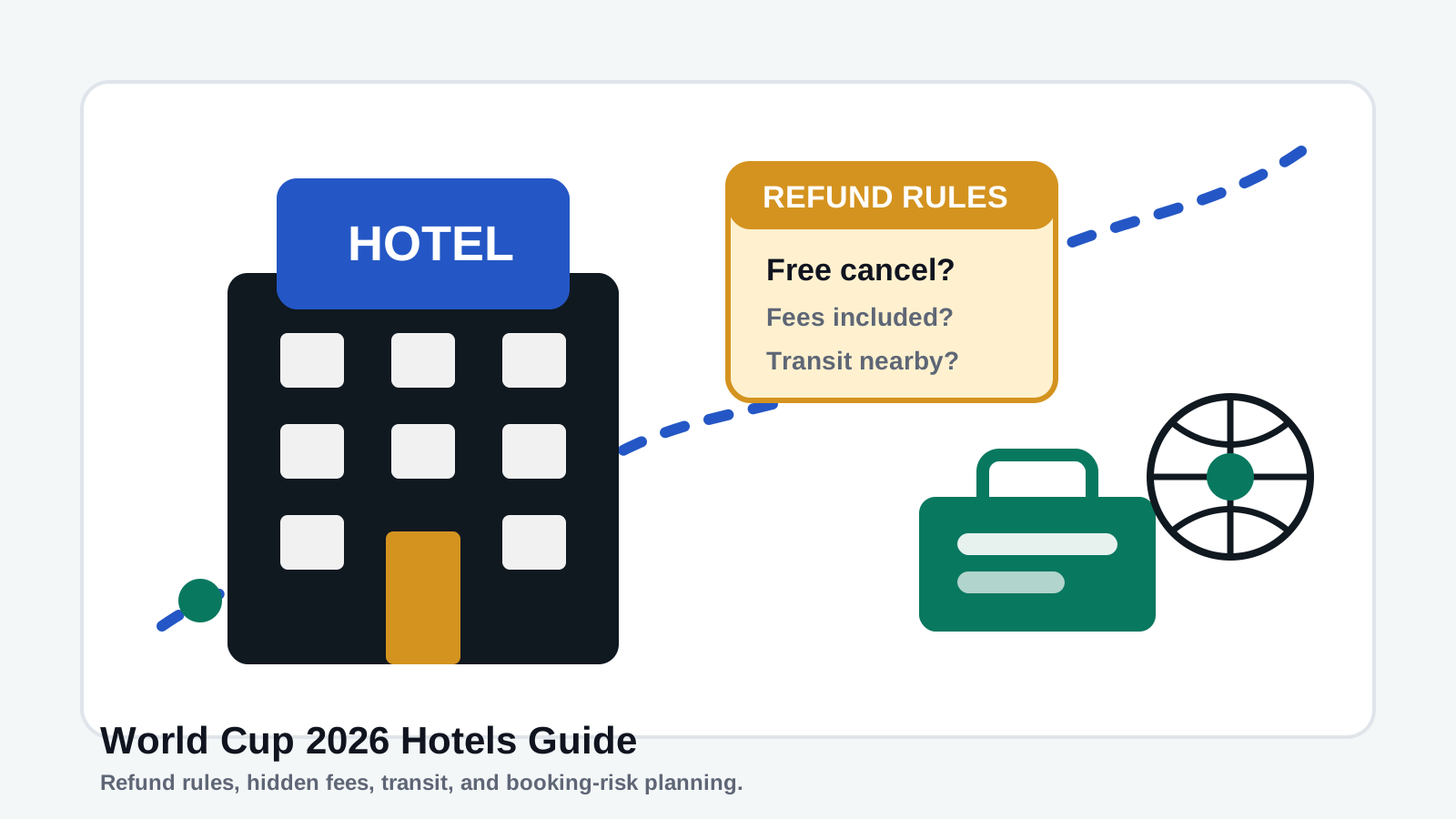
Canada planning should add border documents, currency, roaming, airport timing, and transit to the normal ticket and hotel budget. Toronto and Vancouver can work as single-city trips or as part of a North American route, but flexible booking matters.
Independent planning guide. Not affiliated with FIFA.
- Page type
- Travel budget and route planning
- Risk focus
- Nonrefundable booking, border, transport, and hidden-fee exposure
- Useful services to compare
- Hotels, tickets, insurance, eSIM, payments, transfers, and itinerary tools
Verified Foundation
Facts this budget page depends on
Official-source facts
- FIFA identifies Toronto and Vancouver as Canadian host cities for the FIFA World Cup 2026.
- Canada's official entry requirements page states that visitors may need a visitor visa or an eTA depending on passport and travel situation.
- Toronto and Vancouver trips can involve cross-border movement, currency exchange, roaming, and travel insurance decisions.
- Official ticketing should begin with FIFA ticketing guidance before fans make nonrefundable travel commitments.
What readers must recheck
- Entry, visa, passport, eTA, FMM, and border rules must be checked on official government sources.
- Ticketing should start with official FIFA ticketing guidance before resale or package comparison.
- Paid placements must be labeled and cannot imply official FIFA, government, airline, hotel, or venue status.
Budget Framework
What to price before fans book
| Category | Budget for | Main risk |
|---|---|---|
| Entry and documents | Passport validity, visa or eTA checks when applicable, document copies, and travel insurance. | A ticket and hotel booking do not solve entry requirements; travelers must check their own status on official sources. |
| Currency and payments | Exchange rate, card fees, ATM fees, tips, local taxes, and emergency cash access. | A low hotel rate can become more expensive after currency conversion and card fees. |
| Hotels and transit | Downtown or transit-friendly hotels, airport transfer, matchday return, and cancellation rules. | Outer-area rooms may save money but add transport friction during peak event days. |
| Mobile and roaming | eSIM or roaming package, maps, ticket access, messaging, and emergency calls. | Mobile access becomes a practical need when tickets, transit, and payment depend on the phone. |
Budget for: Passport validity, visa or eTA checks when applicable, document copies, and travel insurance.
Main risk: A ticket and hotel booking do not solve entry requirements; travelers must check their own status on official sources.
Budget for: Exchange rate, card fees, ATM fees, tips, local taxes, and emergency cash access.
Main risk: A low hotel rate can become more expensive after currency conversion and card fees.
Budget for: Downtown or transit-friendly hotels, airport transfer, matchday return, and cancellation rules.
Main risk: Outer-area rooms may save money but add transport friction during peak event days.
Budget for: eSIM or roaming package, maps, ticket access, messaging, and emergency calls.
Main risk: Mobile access becomes a practical need when tickets, transit, and payment depend on the phone.
Route Strategy
Which trip shape fits the fan
Best for
fans prioritizing Canada's first match, downtown hotel access, and short stays
Watch out forairport timing and hotel cancellation windows
Best for
fans pairing matches with west coast travel and outdoor tourism
Watch out forhigher lodging demand and airport transfer planning
Best for
fans combining Toronto with nearby U.S. cities or Vancouver with west coast U.S. travel
Watch out forborder documents, flight timing, roaming, and currency complexity
Decision Rules
Book, wait, or avoid
Book flexible hotels when entry requirements, flight timing, and stadium access are understood.
Wait on nonrefundable cross-border routes until ticket and entry details are reliable.
Avoid assuming Canada travel works like a domestic trip if passports, visas, eTA, currency, or roaming are involved.
Before you act
Before a nonrefundable purchase
- Check official Canada entry requirements for your passport and travel situation.
- Add currency conversion, payment fees, and mobile data to the budget.
- Compare downtown, airport, and stadium-access hotel areas by flexibility.
- Recheck matchday transit, stadium rules, and weather before finalizing the route.
Reader Services
Useful services for this search intent
Canada Hotel Service
A fit for flexible hotels that explain transit access, airport timing, taxes, and cancellation windows.
Cross-border Travel Service
Useful for comparing eSIM, travel insurance, payments, luggage, airport transfer, and document-checking tools.
Transit-Friendly Fan Service
Works for brands that help fans compare rail, transit, rideshare, and airport movement without implying official status.
FAQ
Budget planning questions
Do visitors need a visa or eTA for Canada World Cup travel?
It depends on passport, travel status, and route. Fans should check Canada's official entry requirements page before booking nonrefundable travel.
Should U.S. fans treat Toronto travel as domestic travel?
No. Even when a route feels regional, fans should budget for passport or entry checks, currency, roaming, insurance, and cross-border timing.
Is Toronto or Vancouver cheaper for World Cup travel?
It depends on flight origin, hotel area, match date, cancellation rules, and local transport. Compare total trip cost, not only the hotel rate.